
Another follow up on Ontology from the DMs worth sharing:
No one actually wants a document. They need the data. The document is an artificial construct — and that assumption is what customs modernisation has to break.
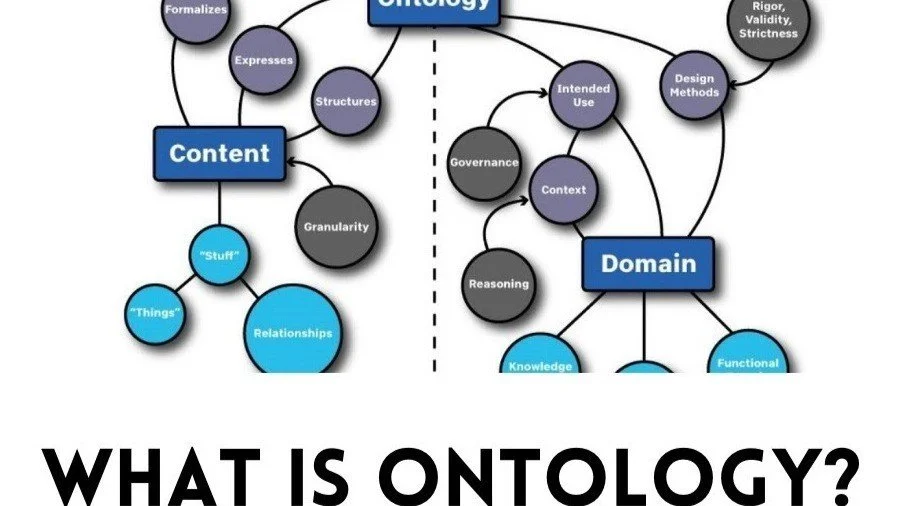
Fair question from a few non-techical colleagues, "What does it mean to be "ontological"?
No one actually wants a document. They need the data. The document is an artificial construct — and that assumption is what customs modernisation has to break.
Most Customs Penalties Don't Start With Fraud. They Start With a Product Description.
No AI resolves a description that was never clean. Classification accuracy starts where someone who knows the product can describe it precisely, in structured form, once.
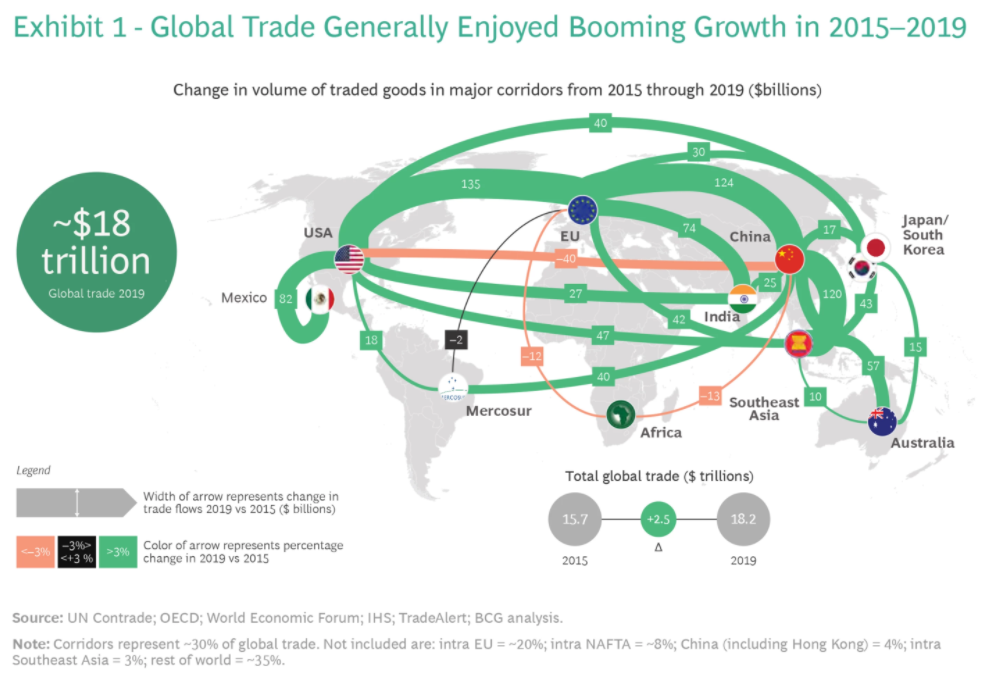
A question came in from a Rules of Origin specialist: how does the Global Customs Canon differ from the UN Transparency Protocol?
UNTP stops at the credential. The Canon asks how the customs risk engine consumes it, at what fidelity, under which HS code. That is the Relationship Gap.
We need a GATT 2.0 ...
The WTO's WTR25 correctly identifies data quality as the binding constraint on AI in trade. It stops one layer short. GATT 2.0 closes that gap.
We Digitised the Document. We Never Fixed the Mental Model.
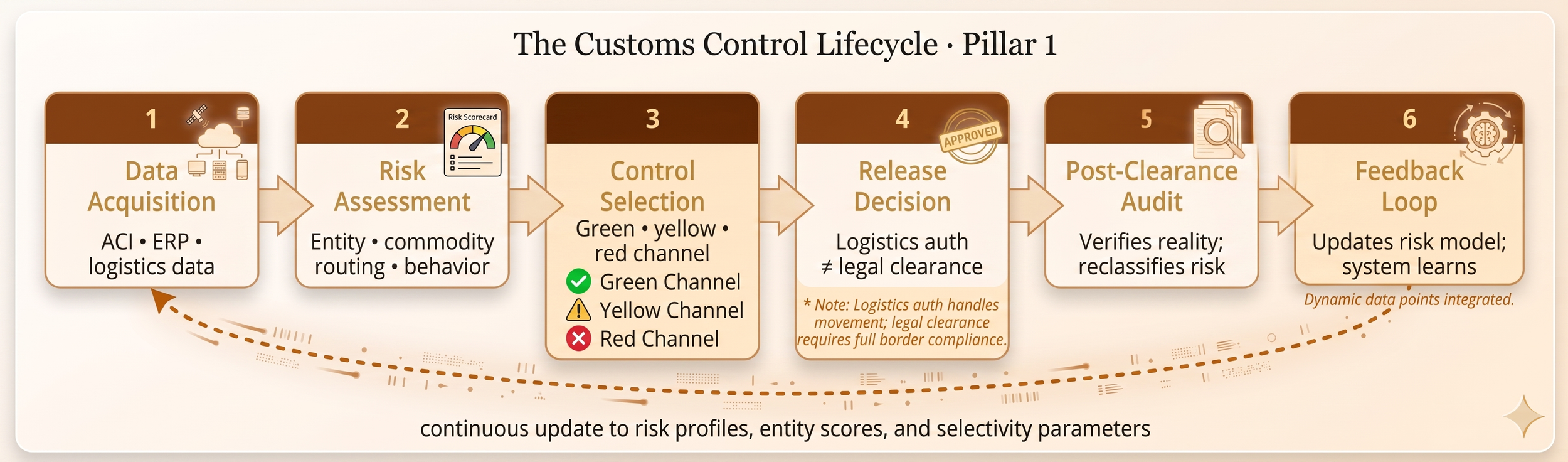
When data relationships are declared structurally — not inferred from filed documents — risk determinations happen before goods arrive. Here's how.
Guidance for Customs & International Organizations
A six-stage investment sequence for customs administrations and specific alignment actions for WCO, WTO, ICC, UNECE, and UNCITRAL. Open access.
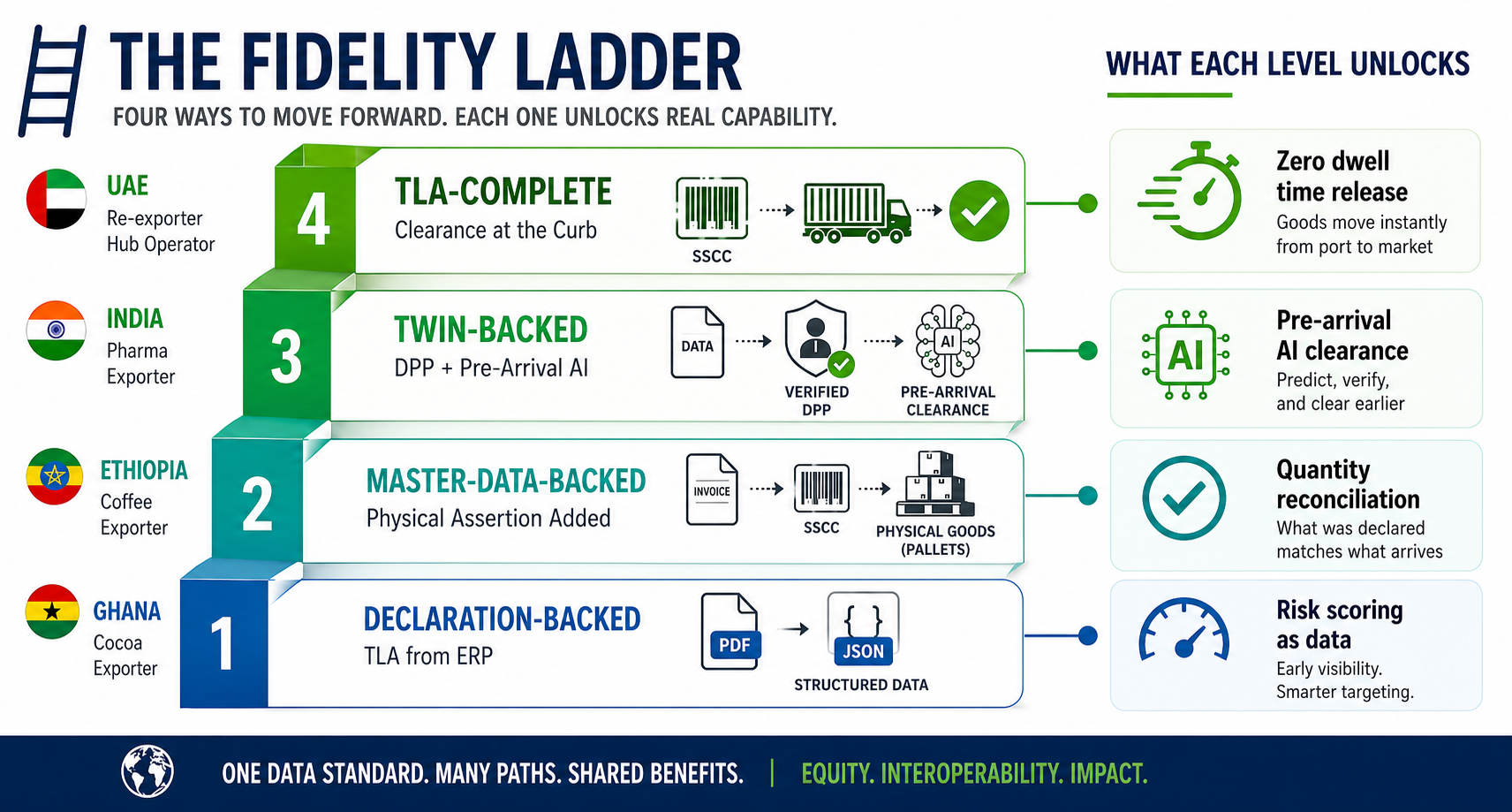
Fidelity Ladder, Trade Line Assertion, and Why Structured Data Serves SME Traders
The structured data objection has it backwards. Unstructured, document-based customs is what locks SME traders out. The fidelity ladder is the fix.
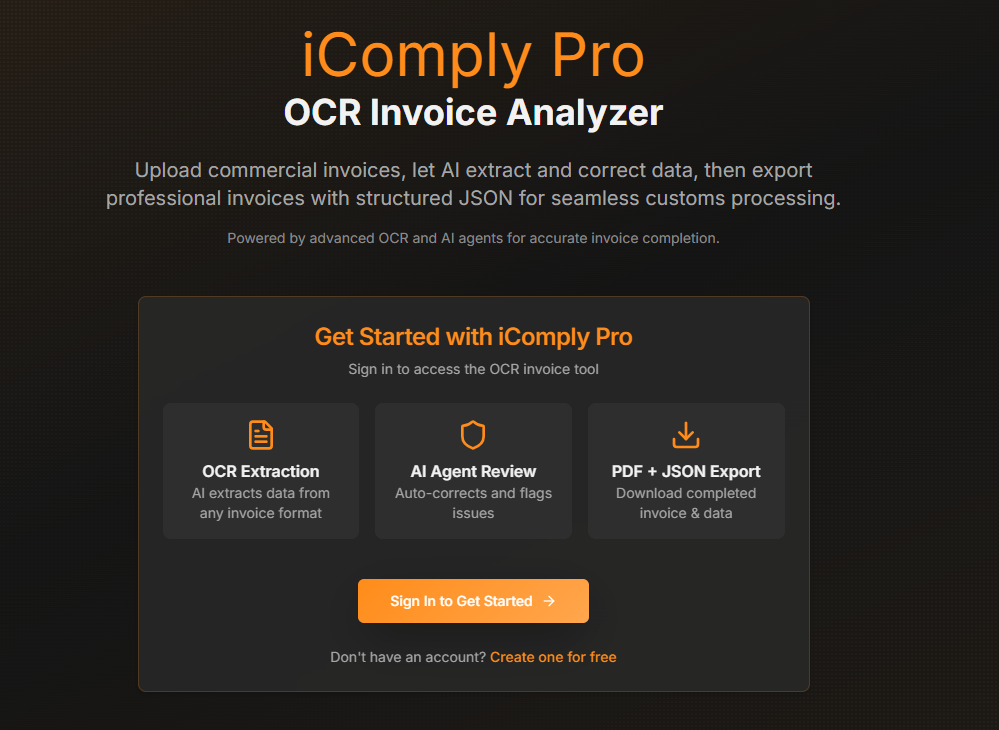
From PDF Invoice to Structured JSON: The Data Mapping Problem Customs Needs to Solve
From PDF invoice to structured JSON in a single flow. Try the demo, export the data, then ask: what would it take to do this across 200 jurisdictions?
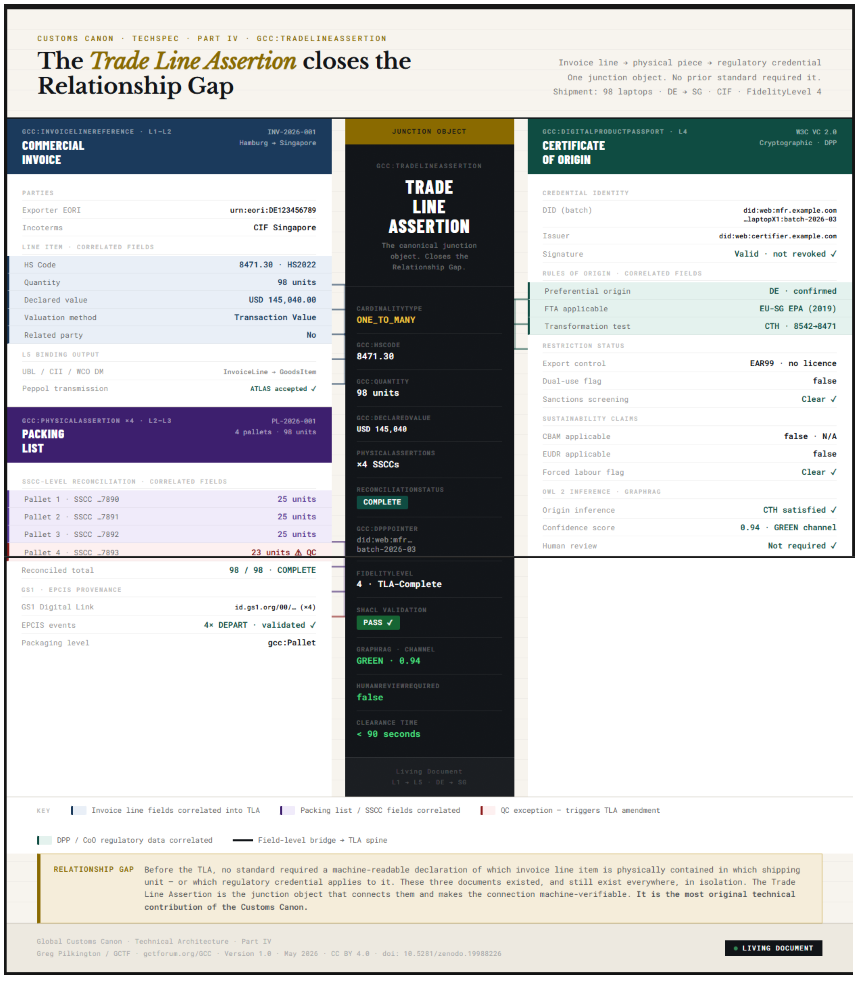
Three Documents, Three Silos, and the Gap That Costs Hours at the Border
Every international shipment has a commercial invoice, a packing list, and a certificate of origin. None of them talk to each other — not in any machine-readable way. That gap has a name, and a solution.
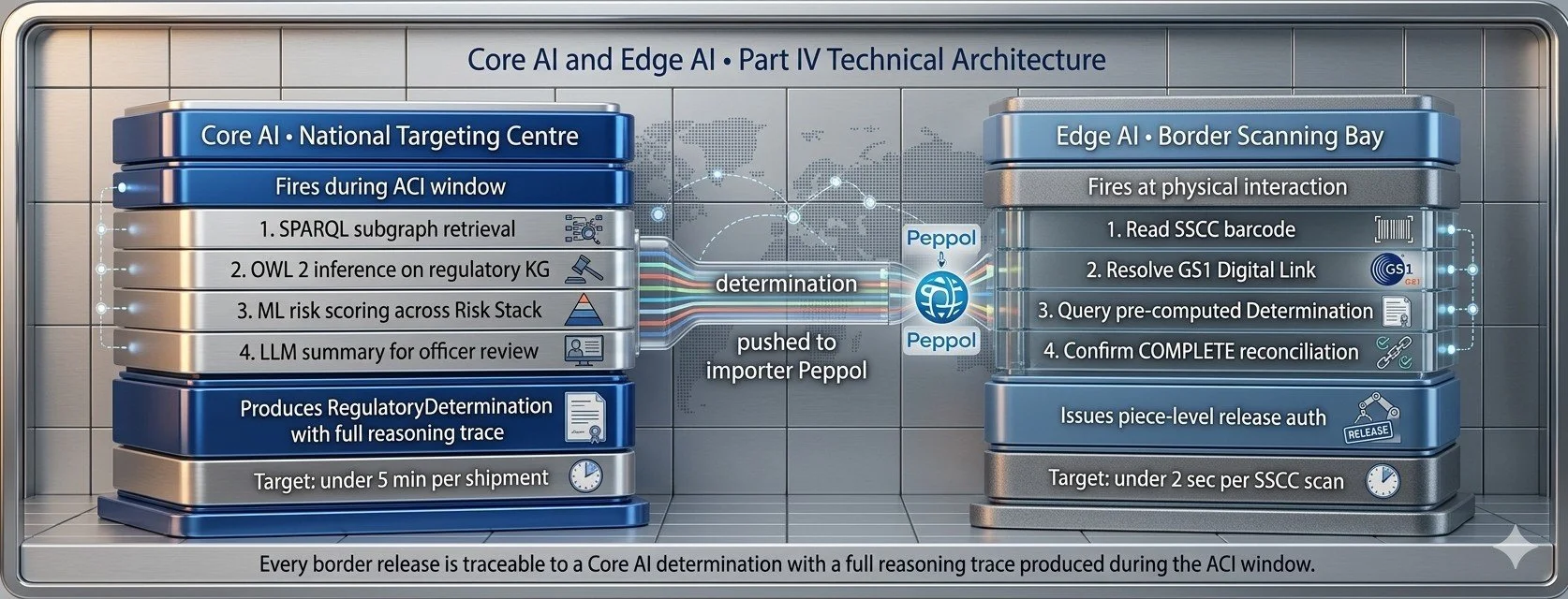
Seven Tools, Three Months, and What AI Actually Contributed
Building the Customs Canon took decades of observation and about three months of writing. The AI part took less time — but it wasn't what I expected. A direct account of which tools earned their place, and what none of them did.
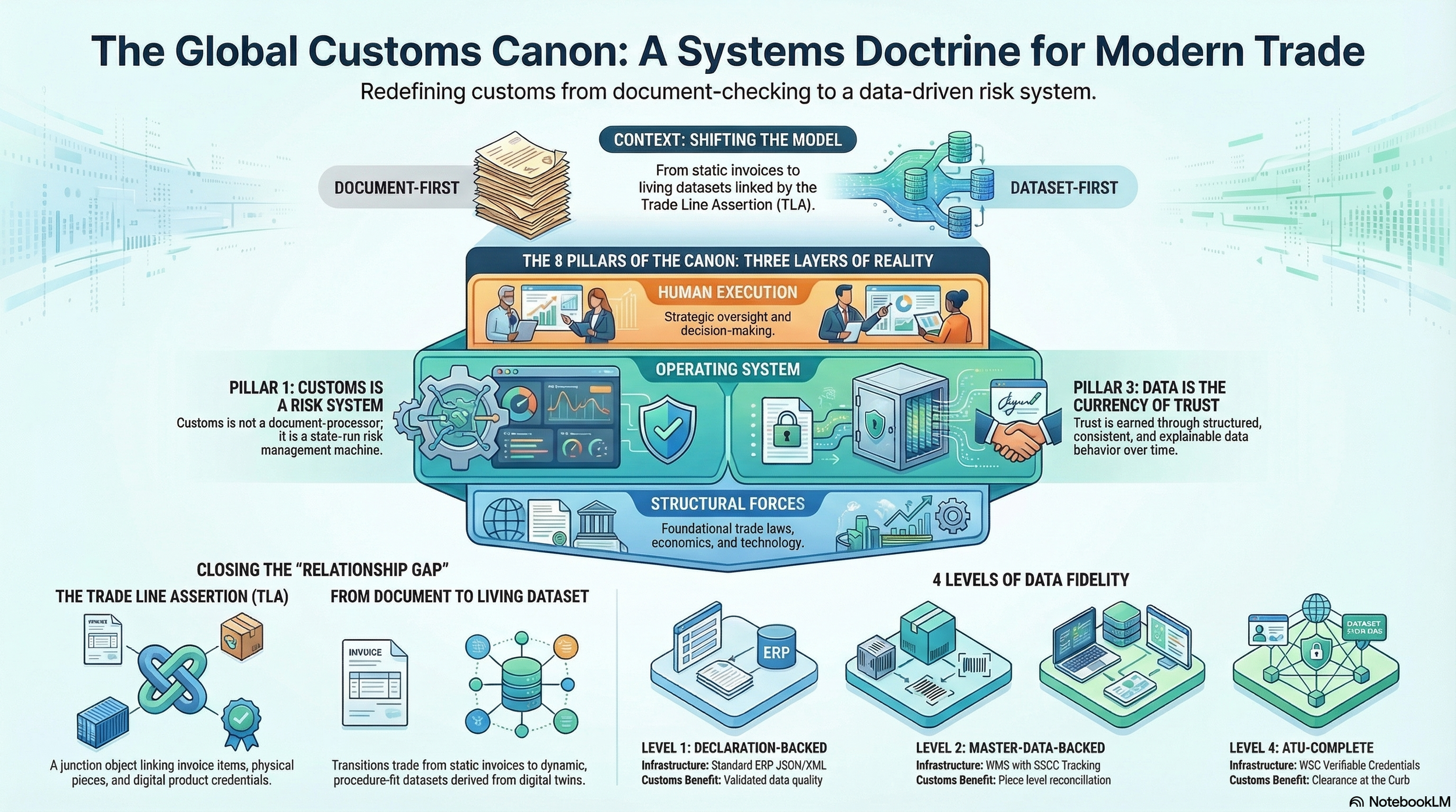
The Global Customs Canon
A Trade Line Assertion that closes the gap between the invoice, the physical piece, and the digital credential. An ontology that gives AI a shared semantic vocabulary to reason over trade data reliably.
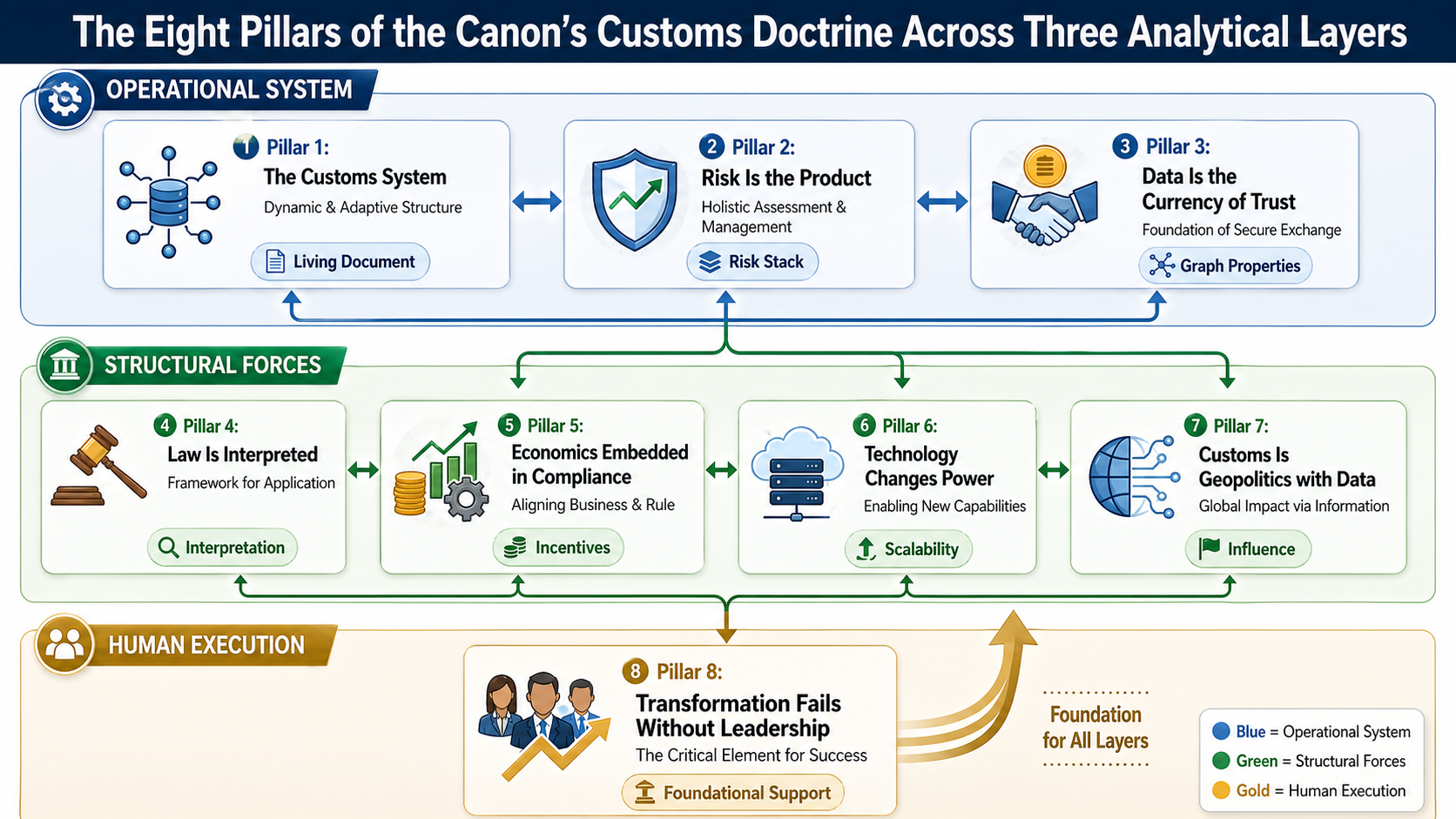
Global Customs Canon Introduction
A short introduction to the Global Customs Canon — the governing doctrine for customs modernisation covering eight pillars, a formal TechSpec, and the standards argument that the field has been missing. Unscripted and direct.
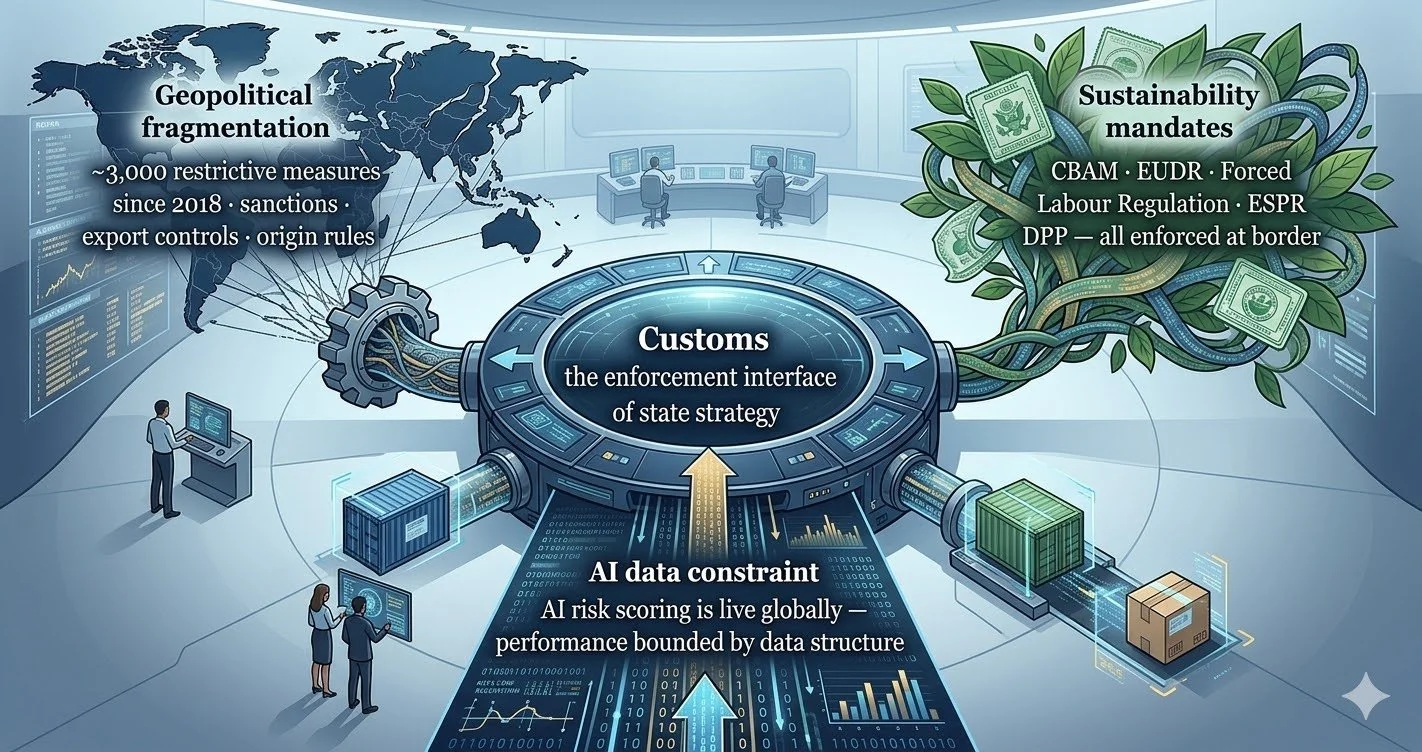
The Standards Moment Customs Has Been Waiting For
Aviation had IATA. Banking had SWIFT. Both fields had to agree on what their data meant before AI could reason across it reliably. Customs hasn't had that moment yet. The Global Customs Canon is the attempt to change that.
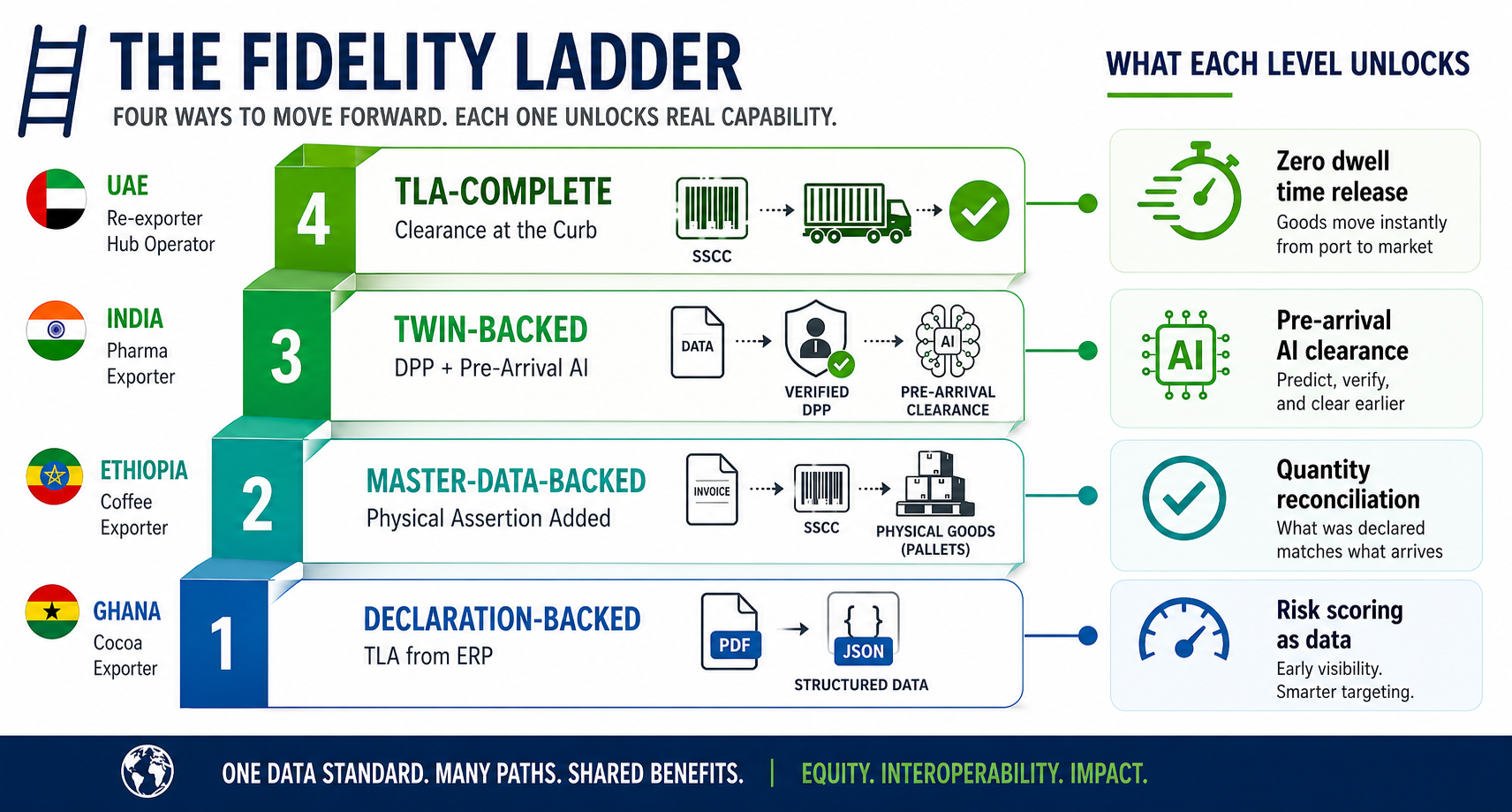
Structure Without Schema Is Not a Solution
The AI pitch in customs is "we can structure your unstructured data." The honest follow-up question — the one that doesn't get asked in the sales meeting — is: structured according to whose schema?